Balloon light accessories: tripods, filters, power
The parts that decide whether a lamp is usable: the tripod that carries it, the diffuser that softens it, the filter that keeps insects out of it, and the power that runs it where there is no mains.
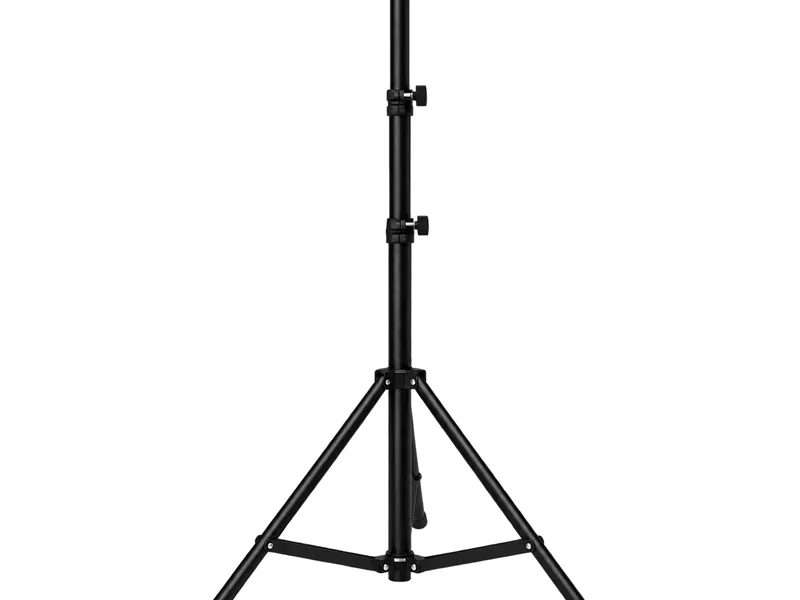
Five sizes from 2.0 m to 4.8 m, rated 20 to 80 kg. The load decides which head goes on the mast, and the wind rating decides whether it stands there.
Builds in this line (2)
The two that get specified most
Tripods and power. Both are decided by the lamp, and both are the reason a quotation goes wrong.
Accessory list
What ships with the lamp, what is optional, and what is worth keeping in stock.
| Item | Sizes or ratings | Why it matters |
|---|---|---|
| Tripod | 2.0, 2.8, 3.8, 4.0, 4.8 m, 20 to 80 kg | Carries the head, sets the coverage |
| Power station | 300 W / 1000 Wh and 1000 W / 2000 Wh | Runs a lamp with no mains |
| Generator | 2.2 kW rated, 2.5 kW peak, 4.2 L | Long shifts, fast refuel |
| Diffuser | 40 to 100 cm balloon, flame retardant | The part that makes the light soft |
| Filter | Replaceable insect and dust filter | Keeps output up on a dusty site |
| Carry bag | Head bag, tripod bag | Transport and storage |
The filter and the diffuser are consumables. A spare set on the shelf is cheaper than a week of reduced output on a dusty site.
The tripod is a load rating first
Every tripod has a maximum height and a rated load, and the load decides the head. A 4.8 m mast rated at 40 kg takes the largest balloon heads; a 2.0 m tripod at 20 kg is for a floodlight pair or a small balloon. Buying the tallest mast for a light head is safe. Buying the cheapest mast for a heavy head is not.
The mast material matters on a long job. Steel is stiffer and heavier, aluminium is easier to move and flexes more. Both are fine when the tripod is used inside its rating and the legs are on firm ground.
- 2.0 m
- 20 kg rated, floodlight pair
- 2.8 m
- 20 kg rated, 500 W class
- 3.8 m
- 80 kg rated, heavy head
- 4.0 m
- 80 kg rated, heavy head
- 4.8 m
- 40 kg rated, largest balloon
- Material
- Steel and aluminium, manual lift
- Base
- Folding legs, air cushion lowering
- Spares
- Filter, diffuser, carry bag
Power without a mains supply
Three ways to run a lamp where there is no socket, and the honest trade in each.
- Power station, 1000 Wh: 300 W continuous. Runs a 240 W lamp for about three hours, or a 150 W head all evening. Light enough to carry.
- Power station, 2000 Wh: 1000 W continuous. Runs a 320 W lamp for about six hours. This is the one that matches a medium cart.
- Generator, 2.2 kW: runs any lamp in the range, refuels in minutes, and brings noise and exhaust to the site.
- Vehicle DC: the 60 to 240 W heads take DC 12-48 V, which is the cheapest way to light a breakdown from a truck.
A power station's inverter rating is continuous, and the surge rating only covers motor starts. Lamps have no surge, so the continuous number is the one to compare.
Before the order
Three parts that are cheap at the order and expensive later.
- Filter: one spare per lamp. On a dusty site the filter is cleaned weekly, and a clogged one costs output before it costs a repair.
- Diffuser: a pierced balloon takes the lamp out of service. A spare diffuser is the difference between one night and one week.
- Plug and cable: local plug type, cable length and whether the quick connector matches the rest of the fleet.
- Tripods
- 2.0 to 4.8 m, 20 to 80 kg
- Power
- 1000 and 2000 Wh stations
- Generator
- 2.2 kW rated
- Ask for
- Spares list, plug type, cable length
Send the site, the hours and the power.
Site type, the hours the light has to run and what power is available is enough. The reply is a build, a specification sheet and the option list for each line item.