LED balloon light vs floodlight for site lighting
Both are LED, both are portable, and both are sold as site lighting. The difference is the shape of the light, and that shape decides which one a crew can work under for eight hours.
One is a surface, the other is a point
A balloon light is an LED array inside an inflated fabric diffuser. The fabric becomes the source, so the light arrives from roughly a square metre of surface instead of from a panel the size of a book. A floodlight is the opposite: a dense array behind a lens, aimed at a target.
That single difference produces everything else. A large source is soft, so shadows open up and the light wraps around equipment. A small source is hard, so it throws further for the same power and cuts off where the beam stops.
Glare, and why it stops work
Glare is not a comfort issue on a site, it is a safety and productivity issue. A worker who walks past a floodlight at head height loses several seconds of vision, and a driver on an adjacent lane loses more. A balloon at four metres is bright to look at, but it is bright over a large area rather than at one point, so the eye does not have to recover from a single intense source.
This is why paving crews, emergency response and event sites settle on balloons, and why signs, bridge soffits and long approaches settle on floodlights. It is also why municipal lighting rules often limit the intensity a lamp may present to a neighbouring road, which a diffused head satisfies more easily than a bare panel.
Coverage per watt, honestly
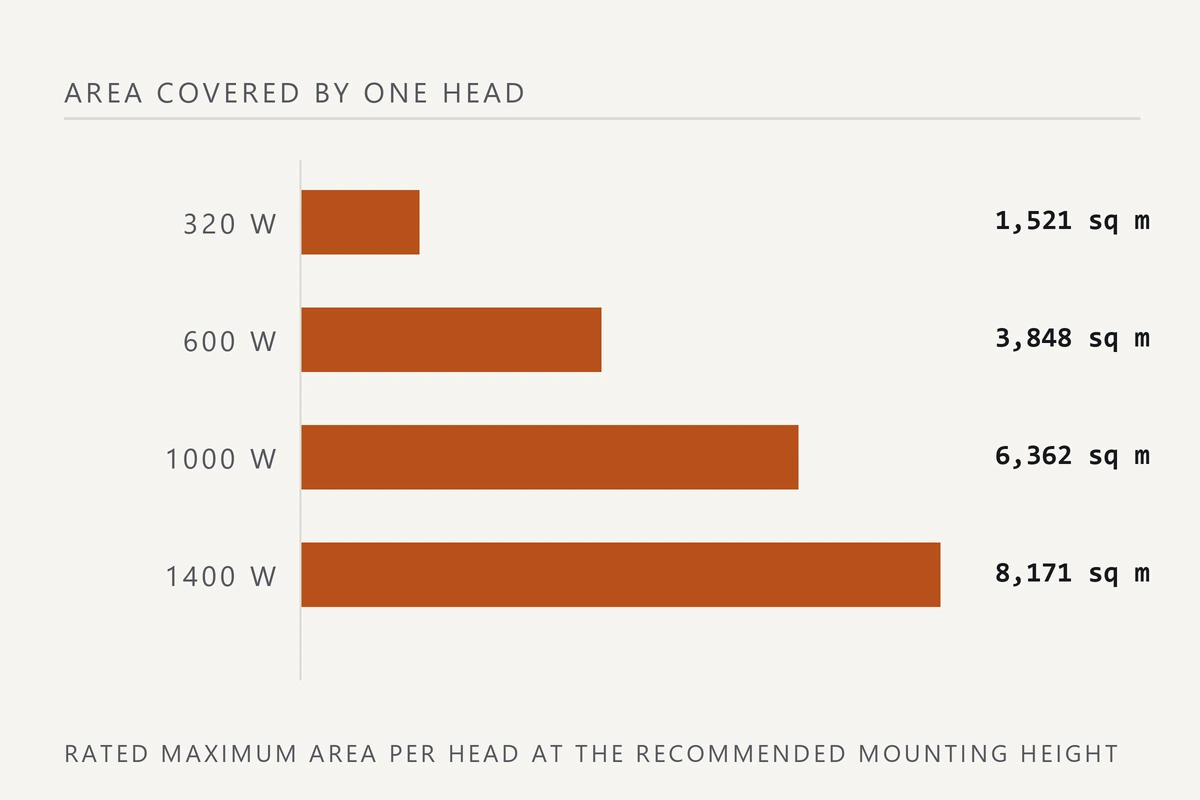
A 1000 W balloon head is rated at 165,000 lm over 6,362 m², and a 1400 W head at 224,000 lm over 8,171 m². A 1000 W floodlight head at 150 lm/W is about 150,000 lm, but it puts that output in a cone, so the lit area is smaller and the level inside it is higher.
Neither number is better. If the job is a 60 by 30 m working area at an even level, the balloon covers it with one unit. If the job is a sign face 25 m away, the floodlight puts useful light on it and the balloon wastes most of its output on the sky and the ground.
| Question | Balloon light | Floodlight |
|---|---|---|
| Shape of the lit area | A circle around the mast | A cone from the head |
| Glare at eye level | Low, large source | High, small source |
| Shadows | Soft, often filled | Hard, one per object |
| Throw distance | Limited by the diffuser | Long, decided by the beam angle |
| Best mounting | 4.0 to 4.8 m mast | 2.8 to 4.0 m mast, or a fixed bracket |
| Typical job | Paving, response, events | Signs, soffits, approaches, perimeters |
Setup, power and the practical difference
A tripod balloon head is one person and a few minutes: legs out, mast up, head on, power connected, balloon inflates. A floodlight pair on a tripod is the same order of time, and then the aiming starts, because two heads have to be pointed at the same working area without blinding the person who has to walk between them.
Power is close enough to be a wash. A 1000 W balloon head draws 1 kW; a 500 W floodlight pair draws 1 kW and covers less area at a higher level. Where they diverge is the supply: above roughly 600 W a battery station stops covering a full shift, so most large sites end up with a generator either way.
The cases where a floodlight still wins
- Long throw: a sign, a tower or a bridge deck that has to be lit from the ground.
- A defined edge: a working area next to a live lane, where spill is a hazard.
- High level in a small area: a trench or a pit that needs 200 lux, not 40.
- A permanent mount: a bracket on a wall, where a balloon has nothing to hang from.
The reverse list is shorter and more common: any job where people walk through the lit area, any job where the light has to be moved twice a shift, and any job where the neighbours can see the lamp.
How to decide in five minutes
- Write the area to be lit and the lux the task needs. Multiply them to get lumens, then add a third for losses.
- Decide whether the edge of the light matters. If it does, a floodlight; if not, a balloon.
- Decide where the light can stand. A balloon needs 4 m of mast, a floodlight needs a target.
- Check the power. Above 600 W, plan a generator or mains rather than a battery station.
Most large sites end up with both, sharing the same masts, carts and generator. The second type then costs the heads and nothing else, which is the cheapest way to cover the corner of a site the balloon cannot reach.
Updated 2026-10-22 · 4 min read. Specifications change without notice; confirm the current sheet before you publish a claim or write a tender document.
Questions that come back
Short answers, before the email.
Is a balloon light brighter than a floodlight?
Not per watt. A balloon spreads its output over a wide area, so the level at any one point is lower than a floodlight of the same wattage aimed at that point. It lights more area at a lower level, which is usually what a working site needs.
Can a balloon light be used indoors?
Yes, and that is one of its advantages: there is no exhaust, no glare source at eye height and no hot lamp housing. Check the ceiling height for the balloon and the mast before the order.
Which one is cheaper?
Per lit square metre at a working level, the balloon usually wins because one head covers more area. Per lux on a small target, the floodlight wins because none of its output is wasted.
How much wind can a balloon light take?
That is a property of the tripod and the balloon, not a single number. Ask for the wind speed the tripod is rated to with the head mounted, and bring the mast down before a gust front.
Do I need both?
If the site is larger than one head can cover evenly, yes. Two balloons cover a working area; one floodlight covers the approach or the sign.
Send the site, get the configuration.
Head, mount, power and the specification sheet for each line item, in one reply.